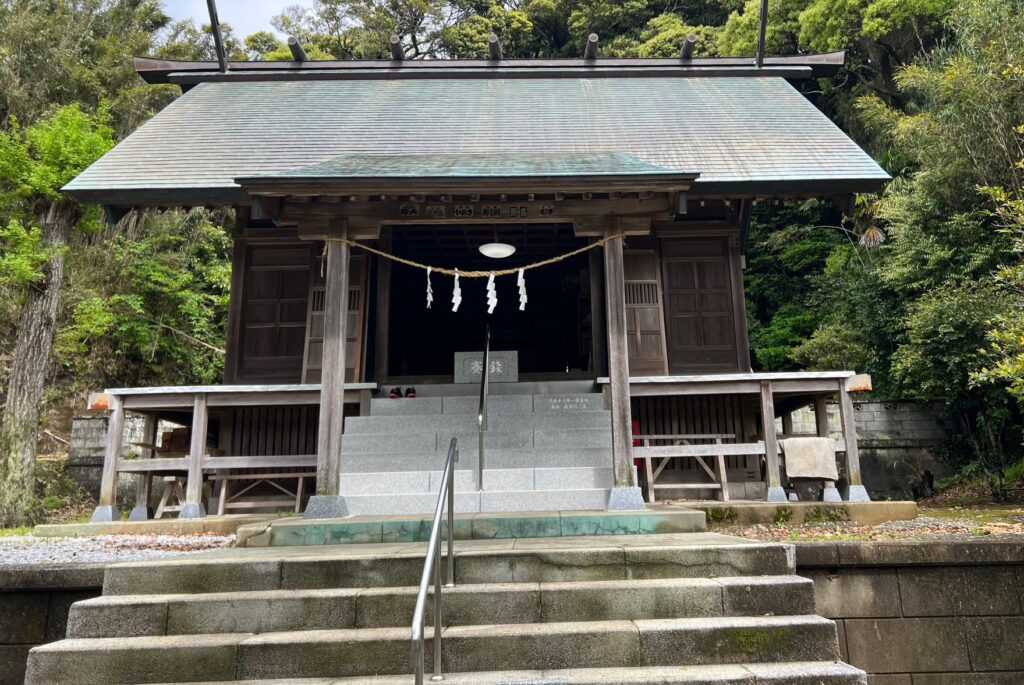
Sunomiya Shurine
Location: 921 Sumiya, Tateyama City
Main deity: Ame-no-hirinome-no-mikoto
Shrine status: Shikinaisha (large), Ronsha, Former prefectural shrine
Established: (Actual) First Year of Emperor Jimmu
Main hall style: Shinmei-zukuri
Regular festival: Early August
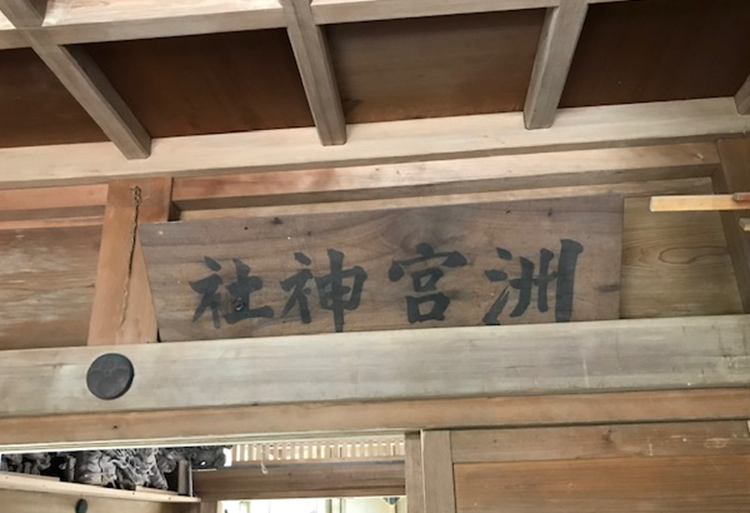
The guardian deity of the Sunomiya area. It enshrines Amenohirinome-no-mikoto, the consort of Ame-no-futodama-no-mikoto, the deity enshrined at Awa Shrine.
Carvings placed on the upper part of the shrine
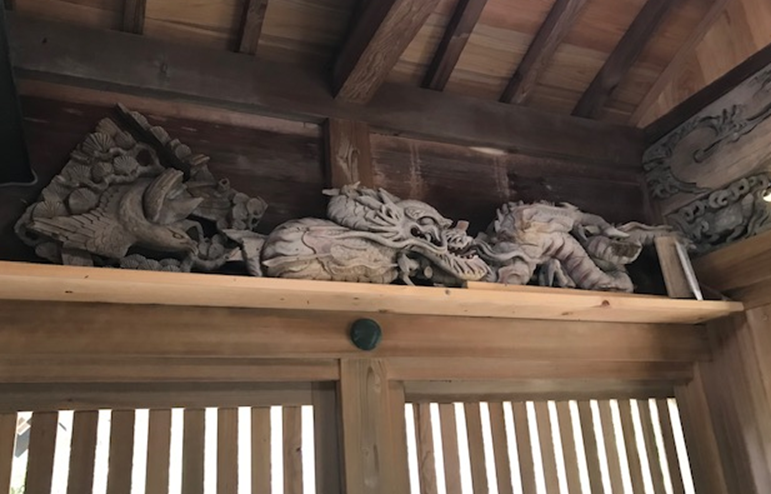
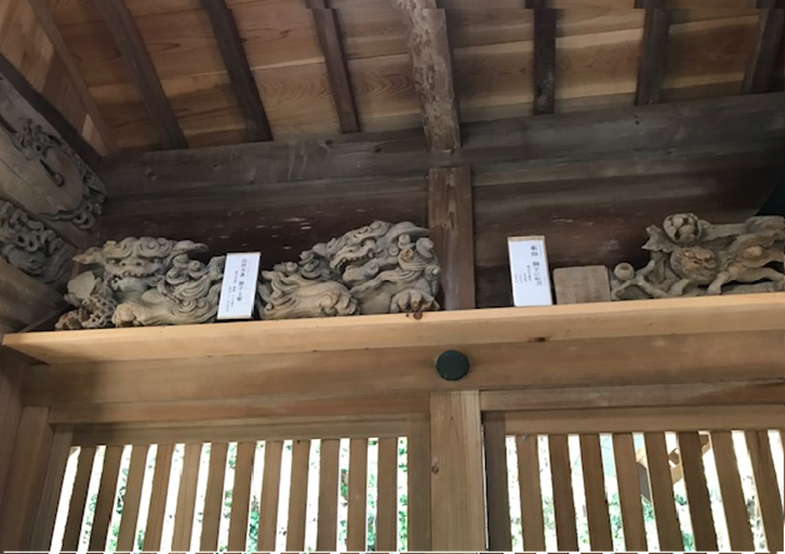
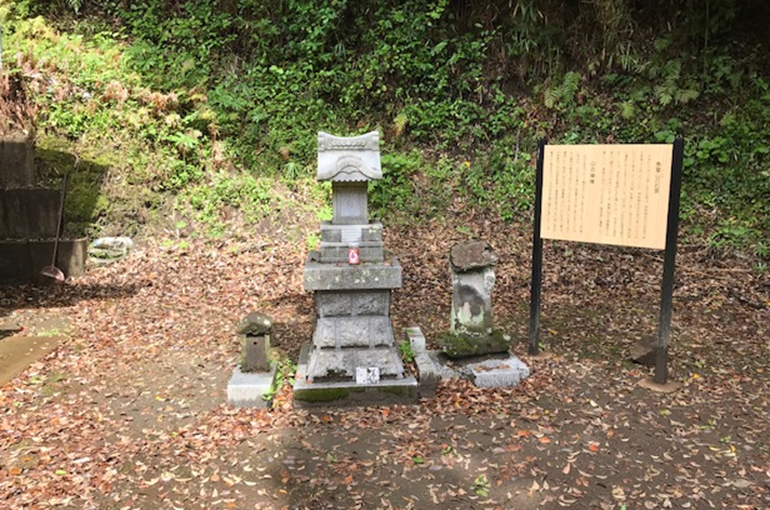
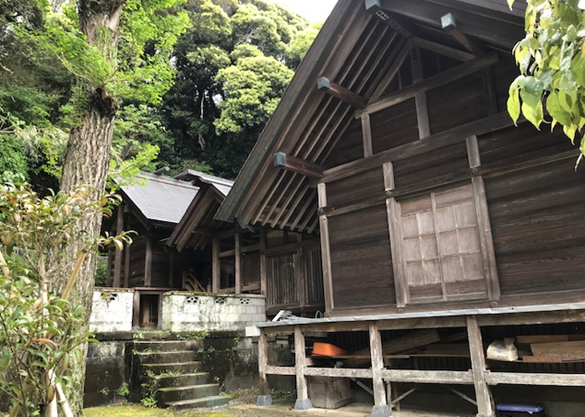
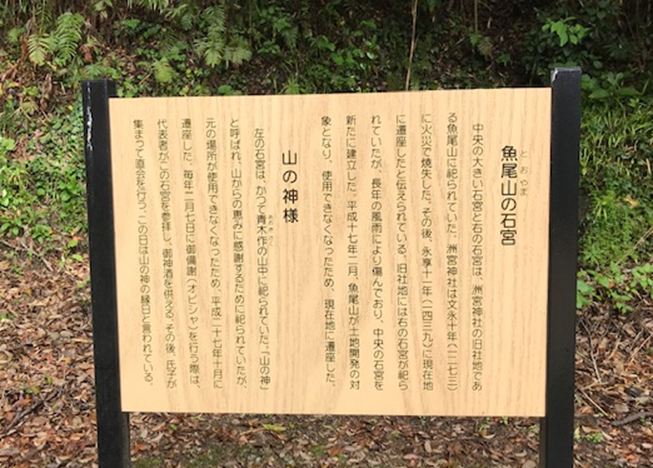
There are three stone shrines to the side of the main shrine, and the ones in the center and on the far right were moved from the former shrine site on Mt. Tooyama.
The small stone shrine on the far left is for the “mountain god” who was originally enshrined on the mountain as an expression of gratitude for the blessings from the mountain and was moved there.
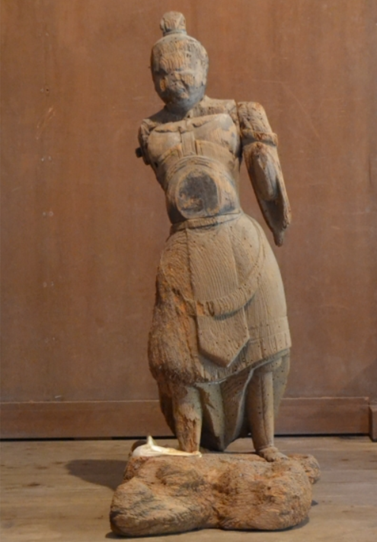
Wooden standing statue of a Tenbugyouryu
Made from a single piece of wood, both hands are glued together at the shoulders, but the right arm is missing, the left hand is missing beyond the elbow, and the face is badly damaged, so the appearance of the statue is unknown.
It is thought to be one of the Four Heavenly Kings or the Two Heavenly Kings, or perhaps a statue of Bishamonten. It is a statue with a gentle feel for an angry statue. The statue is 76.5cm tall. The overall carving is shallow, giving it a Fujiwara-style impression, but the body is flat and the legs are thin, so there is little movement, and the head looks a little small compared to the body.
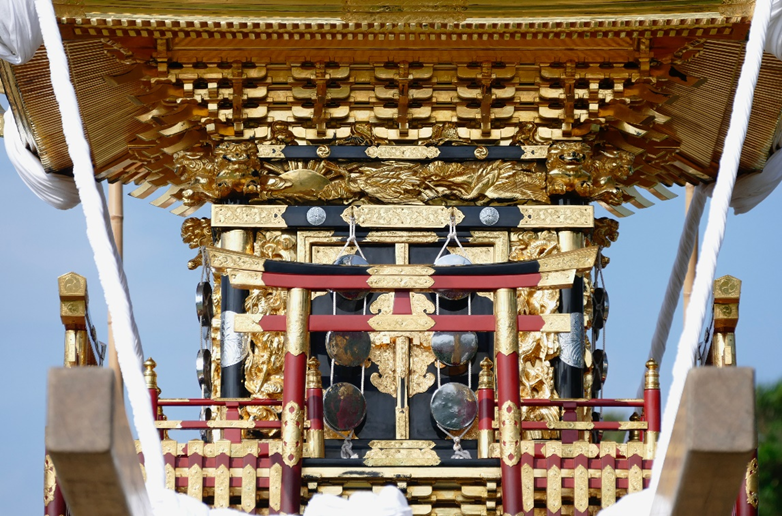
Mikoshi (portable shrine)
The roof is decorated with a glittering paulownia crest, the main body of the portable shrine is painted with beautiful black lacquer, and the shrine is beautifully harmonious with delicate carvings, gold leaf decorations, vermilion-painted torii gates, and surrounding fences.
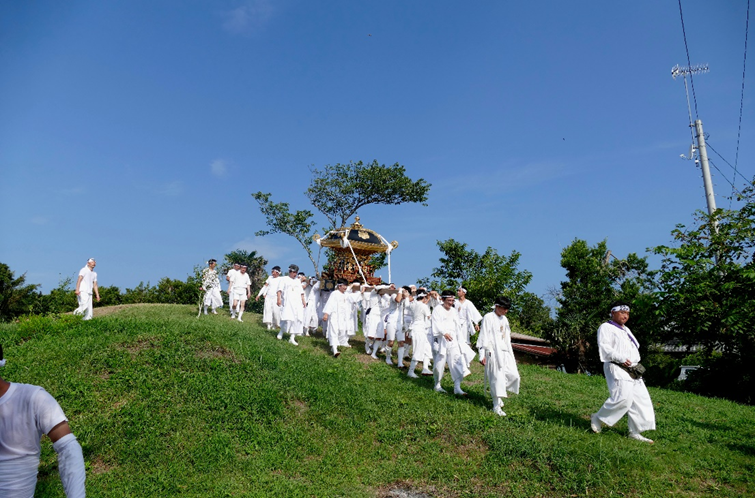
The portable shrine of Sunomiya Shrine is exhibited at the Sunomiya Shrine Annual Festival in August and at the Awa Province Priesthood (Yawatanmachi) held at Tsuruya Hachiman Shrine in September.
At the Sunomiya Shrine Annual Festival, a Hamadori ritual is held early in the morning, climbing a small hill called “Myojinyama” on the old shrine grounds, about 1 km from the current shrine site.
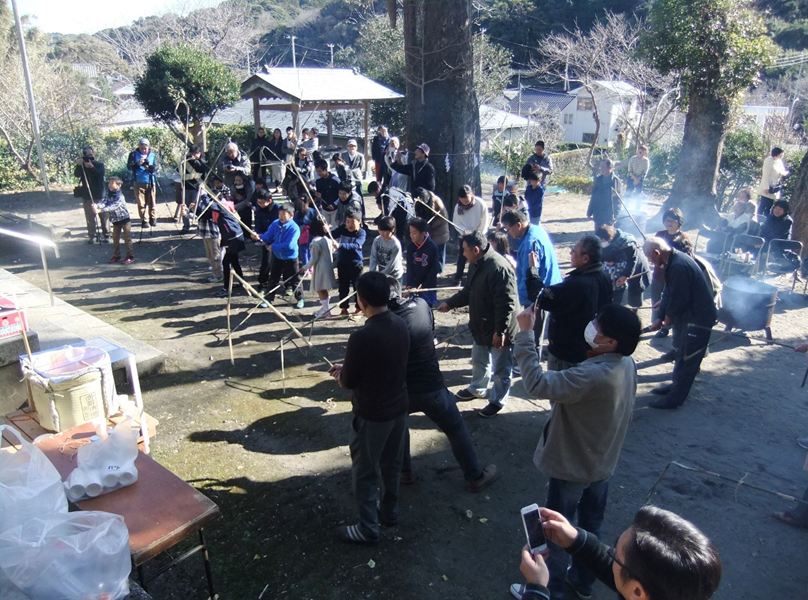
Rice planting ritual
(City intangible folk cultural property)
Rice planting ritual
(City intangible folk cultural property)
A ritual to pray for a good harvest held in front of the shrine on the morning of New Year’s Day. An elder member of the shrine is appointed as the “conductor,” and a newlywed or married man from the area is chosen to be the “cow” for farming. In the square in front of the worship hall, rice cakes, rice husks, seedlings, etc. are offered, a bamboo hoe is placed, and the conductor chants “The moon is good, the day is good, God’s rice planting is said” three times, and children make the gesture of planting the bamboo hoe. It is a traditional ritual.